
The next book- the mystery goes deeper
- sonlitknight

- Dec 29, 2025
- 7 min read

After finishing ''The Truth about Therese'' which I bought in Washington, DC on the occasion of seeing her relics, I have decided to jump right into the other book I bought that day.
If you had told me that, as the weeks passed following my Europe trip, I would be totally obsessed with a particular saint, I would not be surprised. There were so many amazing story lines to choose from and, let's face it, I am an obsessive kind of person anyway.
I encountered, in some way or another, some 20 saints on that trip and nearly all of them affected me profoundly. I expected Therese of Lisieux to have an impact on me. Just not this much of an impact.
The mystery of Therese is as colossal as the basilica built in her honor.

That Basilica would come to be the 2nd most visited shrine in France behind only Lourdes and Therese would be called the 2nd greatest patroness for France behind only Joan of Arc.
Pope Pius X called her the greatest saint of modern times. That sounds like an extraordinary claim, but I don't know if we can fully digest just how extraordinary. Pius X died in 1914, less than 17 years after Therese left this earth. He became Pope in 1903 which was just under 6 years after her death.

When Therese died on September 30th, 1897, her death clearly touched the hearts of heaven, and it deeply affected the sisters that knew her and shared the convent with her. This included 3 biological sisters who also took vows.
The world?
It yawned.
There was no miraculous spring or medal. There was no glorious military battle nor was there any marvelous castle or fortress built by her.
She was, from the world's view, invisible. She would have it no other way.
God had other ideas.

When Therese was obliged to write an autobiographical manuscript of her life, it was for her, very unpleasant. She did not want the focus on herself and really didn't think herself as anything more than the littlest flower in the garden of God.
Her superior thought her wise beyond her years and thought she had much to share on the road to holiness.
Therese obliged out of obedience, to begin the task.
Neither she, nor they, could have known that the later chapters would be written in the throes of an agony most of us can't really comprehend.
As she moved slowly and deliberately towards death, Therese openly stated that she had never imagined it would be possible to suffer so much. Yet, with each new agony, her love of God grew deeper, and she fought harder and harder to drink every drop from the cup of bitterness God had set before her.
It wasn't merely a physical suffering. God withdrew Himself in a way that actually seems cold and cruel so that she didn't just suffer Calvary but Gethsemane as well. She suffered through horrible aridity and desolation as well as physical torment as she soldiered on towards death. The more God seemed to flee from her, the more she pursued Him.
The image of Therese is of a little flower. The reality was the courage and heart of a lioness through the miraculous mystery of Grace. Her life was saintly, her death was heroic, but no one knew except the small circle of religious around her.
As I said before, God had other ideas.
Upon her death, the proper thing to do was to send the obituaries to the various Carmelite orders, seeking prayers for her repose. They decided to have Story of a Soul sent instead. The initial printing of the book, the year after her death in 1898, was a modest 2,000 copies.
Since then, the book has become a worldwide phenomenon with estimated sales placed at half a billion units sold. If you are not a person of faith, these facts are impossible to get your mind around.
There is no miraculous naval victory such as at Lepanto. The sun didn't dance such at Fatima. There weren't thousands cured such as at Lourdes. Her book did not revolutionize theology and philosophy like the Summa.
A book was released and just exploded like a supernova. A completely unknown nun started from total obscurity to the most celebrated saint of at least the last 125 years. That's miraculous. She was canonized less than 30 years after her death.
Why?
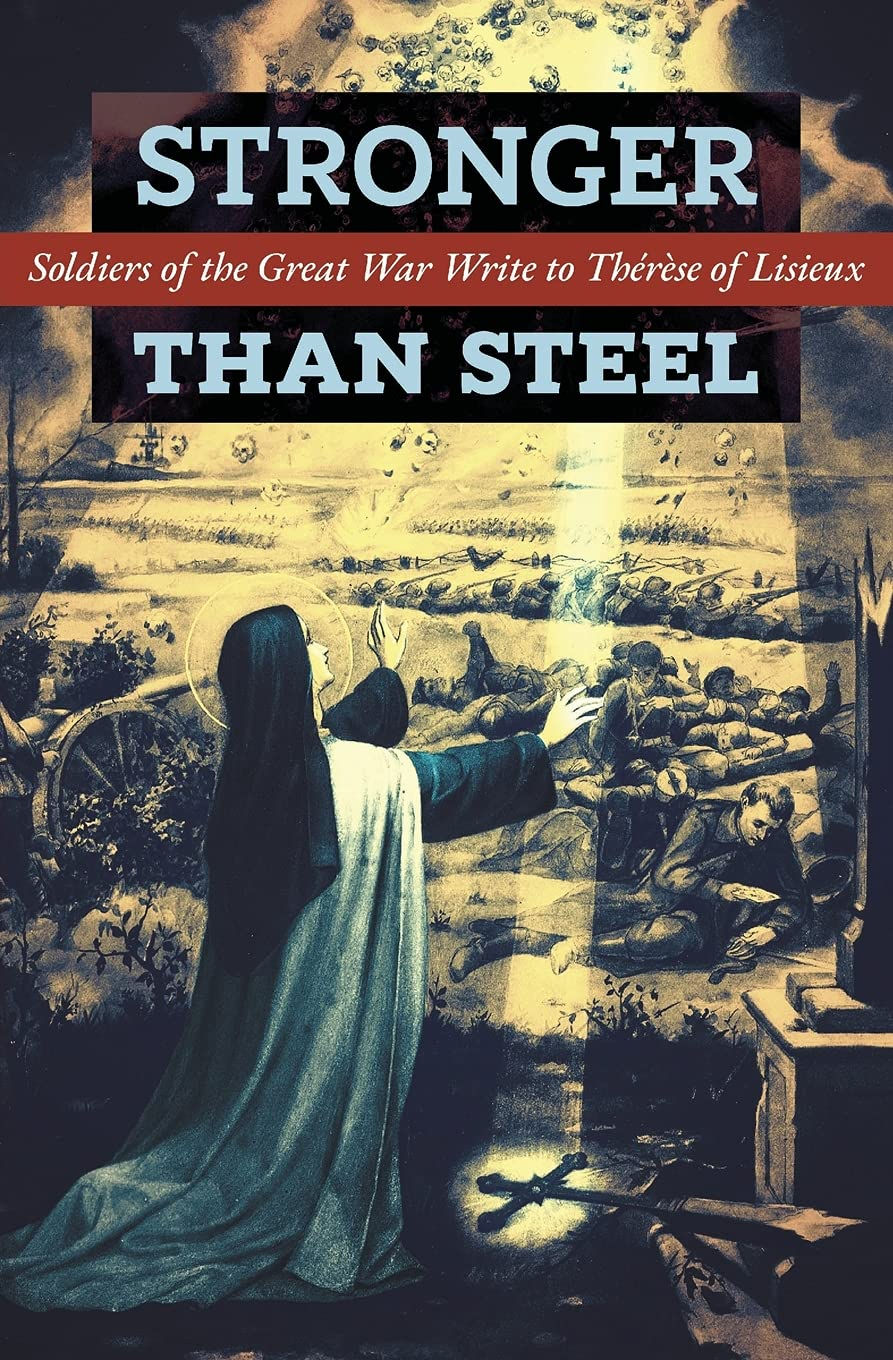
Miracles, including thousands of visions and intercessions to soldiers in WW I.
Saint Thérèse of Lisieux (the "Little Flower") promised on her deathbed in 1897: "After my death, I will let fall a shower of roses." This famous pledge has inspired countless devotees, who often report receiving roses (real, symbolic, or in fragrance) as signs of her intercession, along with profound graces, healings, and protections. The Carmel of Lisieux has archived thousands of such testimonies over the past century, describing everything from physical cures to dramatic conversions and material help.
I, myself, experienced the miracle of the fragrance of roses.
Here are a few of the most impressive and well-known miracles traditionally attributed to her powerful intercession (many of which played key roles in her beatification in 1923 and canonization in 1925):
1. The Healing of Seminarian Charles Anne (Key for Beatification) A young seminarian named Charles Anne was dying from advanced pulmonary tuberculosis in 1906–1907. On what he believed was his final night, he prayed fervently to Sister Thérèse (not yet beatified). Doctors later testified that his completely destroyed and ravaged lungs had been replaced by new, perfectly functioning ones — an instantaneous, inexplicable regeneration that revived his entire body. This medically inexplicable cure was one of the two miracles officially recognized by the Church for Thérèse's beatification.
2. The Instant Cure of Marie Pellemans (Key for Canonization) In 1923, Belgian woman Maria Pellemans suffered from severe intestinal tuberculosis (after pulmonary TB), along with related complications. Previous treatments, including a pilgrimage to Lourdes, brought no relief. While kneeling at Thérèse's tomb in Lisieux, she was suddenly and completely restored to perfect health. This dramatic, instantaneous healing — with no natural explanation — was the second miracle approved for her canonization in 1925.
3. The Famous "Material" Miracle of the Gallipoli Carmel. A poor Carmelite monastery in Gallipoli, Italy, faced crushing debt with no way to pay. The nuns prayed desperately to Thérèse. One night, the prioress had a vivid dream in which Thérèse appeared and promised financial help. The next morning, they miraculously found 500 lire (a significant sum) inside the safe — money that had not been there before. This is often cited as one of the most striking examples of her providing tangible, material assistance to those in need.
4. The Ongoing "Shower of Roses" — Personal Signs and Healings. Devotees worldwide report extraordinary signs after praying to her, especially through the popular 24-Glory Be novena (honoring her 24 years of life). Roses appear unexpectedly (fresh petals, bouquets, even out-of-season flowers), accompanied by healings, conversions, or solutions to impossible situations. Even Pope Francis (as Cardinal Bergoglio) has spoken of receiving white roses as signs after asking for her help. Thousands of these accounts fill books like A Shower of Roses, showing her promise in action.
These stories highlight why St. Thérèse is called the "Prodigy of Miracles" — her simple, childlike trust in God continues to produce wonders through her heavenly intercession. Many people still pray to her today, often saying: "Little Flower, please pick me a rose from the heavenly garden..."
"Little Flower, please pick me a rose from the heavenly garden..."
The 24 Glory Be Novena (also called the "Twenty-four Glory Be's Novena" or "Novena of the 24 Glory Be to the Father") is a powerful and simple devotion to St. Thérèse of Lisieux (the Little Flower). It's especially beloved for invoking her intercession in urgent or difficult situations, often resulting in reported signs like roses (real, symbolic, or in fragrance) as fulfillment of her promise to "spend my heaven doing good on earth" and shower roses upon those who ask.
Origin of the Novena.
This novena originated in 1925, shortly after St. Thérèse's canonization. A Jesuit priest named Father Putigan (sometimes spelled Putingan or similar) was seeking a significant grace. He began praying a novena to St. Thérèse on December 3, 1925, reciting the Glory Be prayer 24 times each day — in thanksgiving to the Holy Trinity for all the blessings and graces bestowed on her during her 24 years of earthly life. As a sign that his prayers were heard, he asked for a freshly plucked rose. On the third day, an unknown person (or in some accounts, a sister who found a rose that mysteriously fell from the altar near Thérèse's image) brought him a beautiful rose. Encouraged, he prayed again and received another sign (a white rose). He then promised to spread this devotion to honor her more widely. Since then, it's been shared globally as a "miraculous" novena, with many devotees reporting answered prayers, healings, conversions, and those signature roses!
How to Pray the 24 Glory Be Novena. It's a 9-day novena (like most traditional novenas), but the core is straightforward and repetitive — perfect for busy people! Begin each day with this opening prayer (or a similar one):
“Holy Trinity, God the Father, God the Son, and God the Holy Spirit, I thank Thee for all the blessings and favors Thou hast showered upon the soul of Thy servant Thérèse of the Child Jesus, during the twenty-four years she spent here on earth, and in consideration of the merits of this Thy most beloved Saint, I beseech Thee to grant me this favor, if it is in accordance with Thy most Holy Will and is not an obstacle to my salvation.”
(State your intention/petitions here.)
Recite 24 Glory Be prayers:
Glory be to the Father, and to the Son, and to the Holy Spirit. As it was in the beginning, is now, and ever shall be, world without end. Amen.
Repeat this 24 times (one for each year of St. Thérèse's life).
Optionally, after each Glory Be, add a short invocation like:
“Saint Thérèse of the Child Jesus, pray for us.”
(Many people use rosary beads to count!)
End with a final prayer, such as:
“Saint Thérèse of the Child Jesus, pray for us.”
Or close with an Our Father and Hail Mary.
You can pray it anytime for 9 consecutive days, but it's traditionally recommended from the 9th to the 17th of each month — during these days, you're united in prayer with others worldwide making the same novena, creating a powerful "communion of intentions.
I can see that much of 2026 is going to see a continued deepening of my devotion to this saint. To learn more about her miracles, I have ordered 2 more books. The second one seems really fascinating as it points to miracles associated with World War I.
I'll keep you all up to date on this journey!



Comments